The Turning Point
December 1776
In the darkest hour of the Revolution, three events in nine days changed everything. A pamphlet, a river crossing, and a dawn attack saved the American cause from collapse.
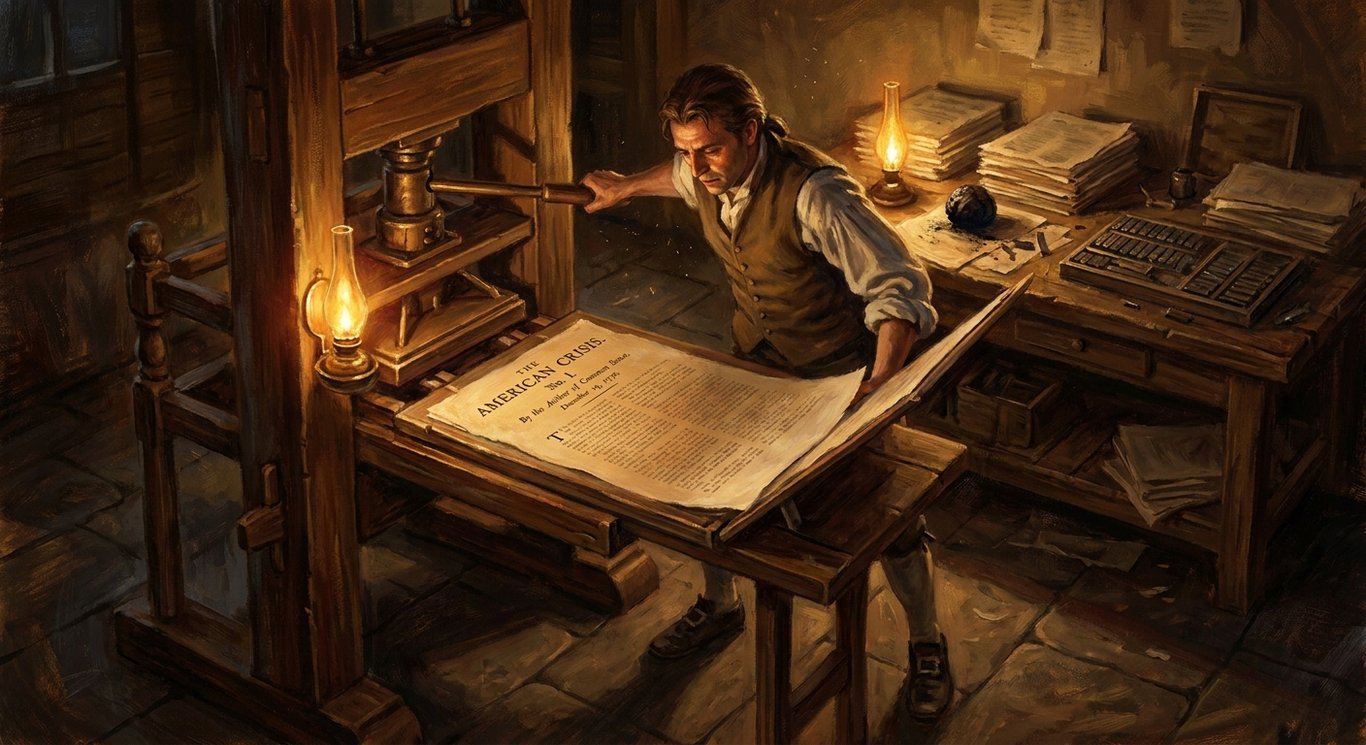
By lamplight the press runs, setting in type the words that would steel a freezing army’s resolve
The American Crisis
By mid-December 1776, the American cause appeared lost. The Continental Army had been driven out of New York and chased across New Jersey. Enlistments were expiring at year's end. Desertions mounted daily.
On December 19, Thomas Paine published the first number of "The American Crisis" in the Pennsylvania Journal. Its opening lines became among the most recognized in American history:
“These are the times that try men’s souls. The summer soldier and the sunshine patriot will, in this crisis, shrink from the service of their country; but he that stands by it now, deserves the love and thanks of man and woman.”
The pamphlet spread through the camps of a freezing, dwindling army, arriving at the moment it was needed most.
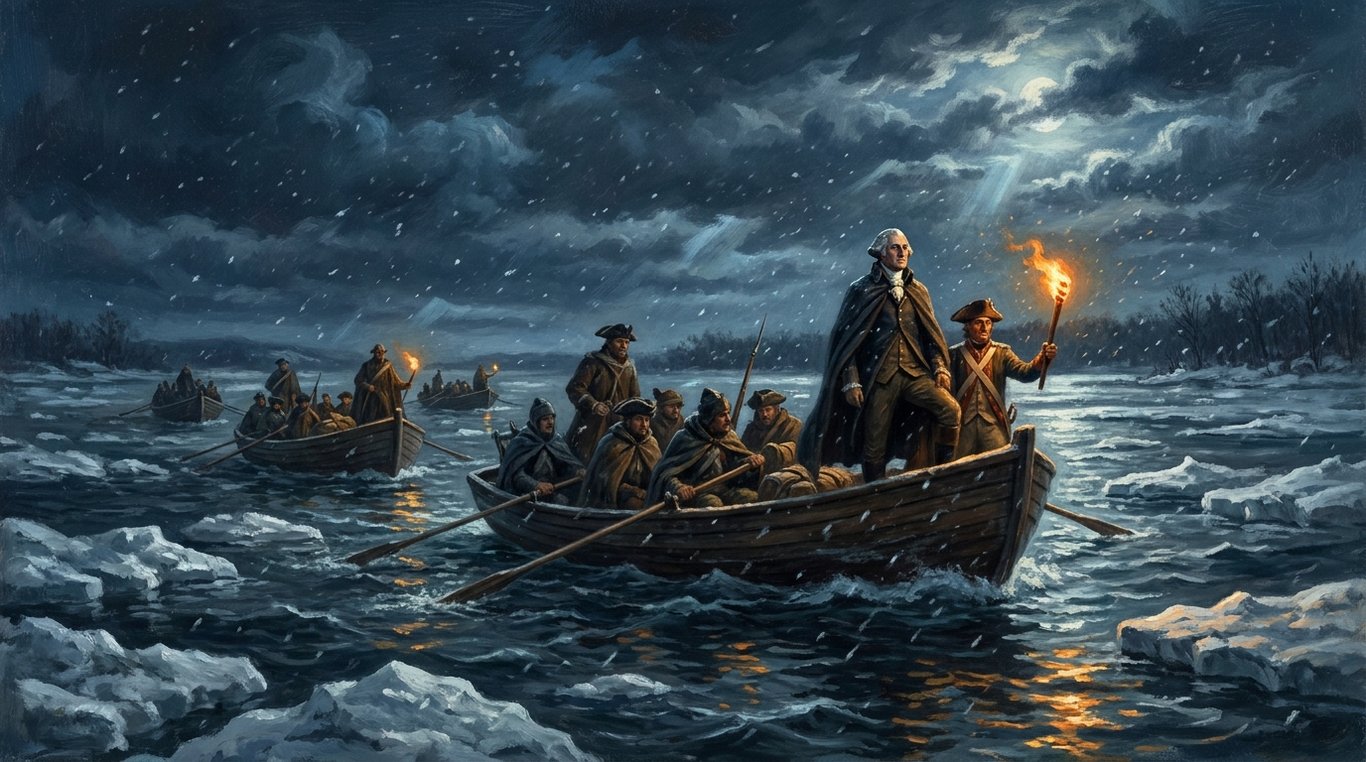
Through sleet and drifting ice, the army crosses into the darkness of New Jersey
Crossing the Delaware
On Christmas night, Washington led roughly 2,400 soldiers across the ice-choked Delaware River from Pennsylvania into New Jersey. The operation, planned in secrecy, used large Durham boats to ferry troops, horses, and eighteen pieces of artillery through a driving storm of sleet and snow.
The crossing took far longer than planned. Two other divisions that were supposed to cross at different points were turned back by the ice. Washington’s column pressed on alone.
By three o’clock in the morning on December 26, all troops were across. They formed into two columns and began the nine-mile march south toward Trenton through the storm.
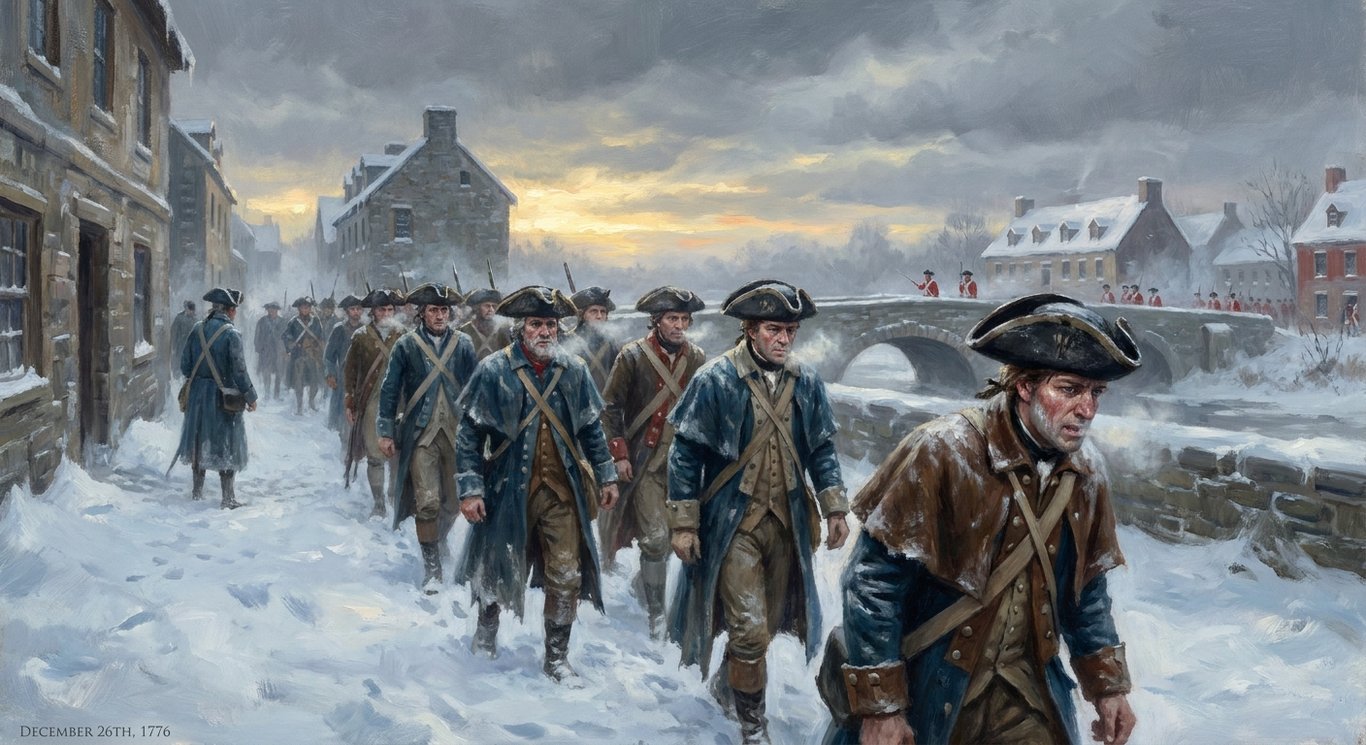
Through the last miles of snow, dawn breaks over a battle that will change the course of the war
The Battle of Trenton
At approximately eight o’clock in the morning, Washington’s two columns converged on Trenton from the north and northwest, achieving complete surprise against the Hessian garrison commanded by Colonel Johann Rall.
Continental artillery commanded the main streets. The Hessians attempted to form up and counterattack but were driven back. Colonel Rall was mortally wounded. The engagement lasted less than two hours.
Washington reported the capture of close to a thousand prisoners, along with six brass cannon, a thousand muskets, and four regimental colours. His own forces suffered only light casualties.
The victory electrified the country. Soldiers whose enlistments were days from expiring chose to stay. It was the turning point: proof that the Continental Army could fight, and win.
Nine days. One pamphlet, one frozen river, one battle at dawn. The Revolution survived because ordinary men refused to let it die.